Highlights of the Fort Smith Board of Directors Meeting 5/26/26
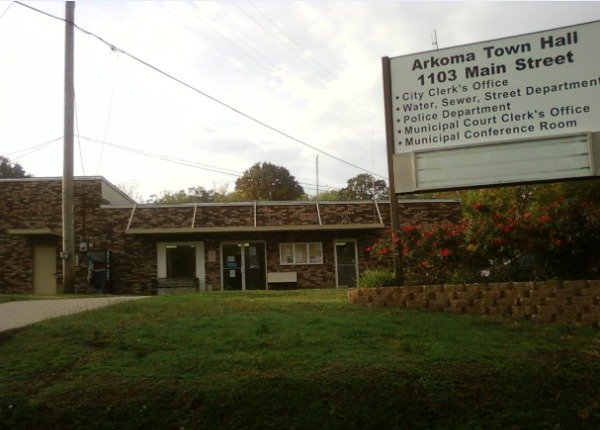
At the Fort Smith Board of Directors study session meeting held 5-26-26, the Board discussed entering into an agreement to provide wholesale wastewater treatment to Arkoma. Agreements were discussed at the 5-13-25, 5-27-25,and 6-3-25 meetings. At the 6-17-25 meeting, the Board voted against approving a new proposed agreement so Arkoma began paying the full same rate as Fort Smith customers.
The Choctaw Nation hired outside firm Hazen & Sawyer to evaluate the rates proposed by Fort Smith and found them to be “fair, defensible” and that they “appropriately captured” Fort Smith’s “cost to serve Arkoma and make a reasonable rate of return for providing the service.” The rates were also compared with Oklahoma City, Tulsa, and Fayetteville. Fort Smith was found to be cheaper than all three. In light of these results, Arkoma has agreed to discuss terms for a new five-year wastewater treatment agreement. Arkoma is working with the Choctaw Nation to develop a plan to be able to provide their own wastewater treatment as soon as possible, hopefully before the 5-year agreement term is finished.
The terms of the proposed agreement include wastewater treatment rates of $3.60 per CCF with annual increases of 3.5% through 2030, billing from 6-1-25 through 12-31-25 recalculated based on $3.48 per CCF with penalties andlate fees removed, billing from 1-1-26 through when the agreement takes effect recalculated based on $3.60 per CCF with late fees and penalties removed, and a plan being established for monthly payments to be made until the full amount owed is satisfied.
Director Martin asked if the cost to treat the wastewater from Arkoma is $3.36 per CCF. Chief Financial Officer Richards confirmed that it is.
Director Settle asked if the bond rate for the bonds for the consent decree sewer work is included in the cost. Richards confirmed that that debt service was included in the calculation of the cost.
Director Martin asked if there are concerns about the lagoon that is part of Arkoma’s plan to process their own wastewater, specifically concerns about unpleasant smells reaching Fort Smith. Acting City Director Dingman assured that the lagoon would have to go through the proper permitting process and said that a lagoon system is “proper and common” for a small town. Director of Water Resources McAvoy said Barling and Lavaca both use lagoons and that theirs have not had issues with odors coming into Fort Smith.
Director Kemp asked about the developer interested in paying off Arkoma’s sewer debt to Fort Smith that was discussed at a previous meeting. Dingman said that is not something that has been discussed recently. Director Kemp asked if the Choctaw Nation will be financially supporting Arkoma’s infrastructure for their planned wastewater project. A representative from the Choctaw Nation clarified that the Choctaw Nation would be providing technical and advisory assistance only and would help Arkoma to find State and Federal grants and help them with planning but would not be involved in funding infrastructure construction. Director Kemp asked for confirmation that the proposed rate in the agreement includes a 10% return on investment for Fort Smith above the cost of providing the water treatment. Dingman confirmed that it does.
Director George Catsavis asked what Fort Smith residents pay per CCF for wastewater treatment. McAvoy answered $9.05 per CCF. Director George Catsavis asked why Arkoma would only be charged $3.60 per CCF and Fort Smith residents would be charged $9.05. McAvoy answered that the $3.60 rate is only for the treatment itself, while Fort Smith is also paying for the infiltration and inflow from the Fort Smith system. Director George Catsavis asked where Arkoma was going to get the money for the infrastructure needed for their planned treatment system. Dingman said that they would get it through utility rates and grants. Director George Catsavis asked McAvoy if he felt like the proposed agreement is an “OK deal for now.” McAvoy confirmed that he does feel like it is.
Director Settle voiced his concern that charging Arkoma a lower rate than Fort Smith citizens are charged creates “no incentive” for Arkoma to build their own wastewater system. He also voiced his concern that if Arkoma is given a lower rate that other cities would also want a lower rate. He said “Barling could be next.” He said “Everybody should be charged the same.”
Director Martin agreed with Director Settle and voiced his concerns about potentially encouraging people to live in Arkoma instead of Fort Smith. Dingman reminded that Arkoma charges their residents an about $35 base rate and then usage rate plus charges to maintain their system and cover their system debt on top of the wholesale rate that goes to Fort Smith. This results in Arkoma residents having a considerably higher total bill than Fort Smith residents. McAvoy agreed that “Their base fee is much much higher.” Director Good mentioned that the bills for Arkoma residents are at or above what Fort Smith residents normally pay.
Director Good reminded that Arkoma residents also pay the consent decree sewer sales tax when spending money in Fort Smith.
Director Kemp asked if treating Arkoma’s wastewater is “cumbersome” to Fort Smith’s system. McAvoy answered “no more so than any other user” as their contribution is “not a large amount.” Director Kemp suggested that a three year agreement term would be better than a five year term. He called the proposed agreement a “potential point to get started on it.” Director Martin voiced his agreement.
Director Christina Catsavis reminded that Arkoma is currently paying $8.75 per CCF and still has not been in compliance with paying their bill to Fort Smith in full at any point. She said that they are billing their residents but just not paying Fort Smith. Dingman clarified that Arkoma has been paying a portion of their bill but not the entire bill. Director Christina Catsavis asked how long a Fort Smith resident could make similar partial payments on their utility bill before having their water shut off. Dingman answered “It wouldn’t be very long.”
Director Martin asked how much Arkoma’s outstanding bill is currently. Dingman answered $141,000 (not including any penalties).
Director Christina Catsavis said “We’re at the rate we’re at because that’s what we felt was acceptable.”
Director Kemp voiced his view that a wholesale customer being charged the retail rate “doesn’t make sense” and said “I prefer some action” be taken towards reaching a wholesale agreement.
Director Christina Catsavis said that with Fort Smith being under a consent decree it is “in no position to be subsidizing” another community. She asked what the EPA’s opinion on the situation is and if it is on their radar at all. Dingman said that it has not been discussed as it is not of concern to them because it is only about one to two percent of the overall flow. Director Christina Catsavis noted that while it is a low percentage overall it is still “hundreds of thousands of dollars.” Director Martin requested that the EPA and DoJ be asked for their feedback on the situation. Dingman expressed that it would not be likely for those agencies to look into that.

The Board discussed whether to contract with Garver for $8,575,000 for engineering for consent decree improvements to the Massard Treatment Plant including designs for 2 new aeration basins, a blower building, solids storage tanks, a dewater unit, a pump station, a peracetic acid basin, secondary clarifiers, a parallel effluent discharge line, a river diffuser, and a wet weather treatment system. Garver would devote 45-50 employees to work on the project. Typically, design costs may cost around 10% of the total project construction cost. The contract with Garver would be for 5.5%-6% of the construction costs for the Massard plant project. This issue was discussed and tabled at the 5-19-26 meeting.
Director Settle asked for confirmation that Garver would be subcontracting $3 million of the contract out to Hawkins-Weir. Director of Engineering Mittge confirmed that they would. Director Settle asked what deliverables would be the result of the contract. Mittge said that it would be stamped plans and project manuals ready to start construction and called it “a turn-key design.” McAvoy mentioned that a lot of value engineering to cut costs had been done before the contract was crafted.
Director Kemp mentioned that his original concern had been about why the contract was written based on a fixed fee approach instead of a billable hours approach, but acknowledged further discussion on the matter has led him to believe that the approach would benefit the City. McAvoy mentioned that he has already found a line item that Garver did not see and that under the proposed fixed fee contract “they’re eating it.” He said that he expects there are places that Garver underestimated the hours that would be required. A representative from Garver said that “some of these sections we probably undershot.”
The contract will be up for a vote at next week’s meeting.
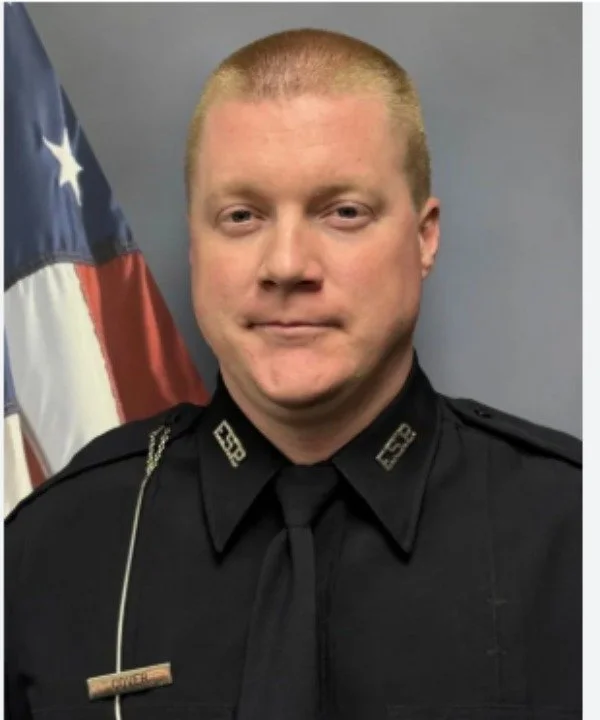
Inspired by the recent line-of-duty shooting resulting in the serious injury of Police Officer Newman, the Board discussed the policy for line of duty injuries for City employees. City staff assure that Officer Newman is “100% covered” by current policies.
Under the current policy, for critical injuries that require investigation (such as Newman’s), the employee receives paid injury leave from day 1 through day 30. From day 31 until the investigation is concluded they receive paid administrative leave. After paid administrative leave they receive workers compensation at 66% of their earnings and may use any accrued sick pay and vacation toward the remaining balance up to 100% of their earnings.
For standard on-the-job injuries, there is paid injury leave for days 1-30 and workers compensation after that.
All medical expenses are covered 100% with zero out-of-pocket costs.
Director Kemp said that for situations like Newman’s that he is “not comfortable personally” with asking the injured employee to use accrued time. Human Resources Director Garvin mentioned that in a similar case 3 years ago that the investigation took until almost 4 months after the initial 30 days so the injured officer was ready to return to work before using the accrued pay would have been a consideration. Director Kemp noted that “investigation” and “critical injury” are different situations. He suggested that if an employee is coming back that their pay should continue and that they should retain their full accrued sick leave. He suggested that there might be wording added to limit that to a 4-5 month period and that extreme lengths of time off being needed might be workers comp situations.
Director George Catsavis said that Newman might be facing three to four years of recovery and expressed his concerns about Newman supporting his family on only 66% of his salary during that time. He said “We’re gonna do something.” and “This isn’t right.” Garvin agreed that the current policy is not designed for the critically injured in situations like Newman’s. Director George Catsavis told him to design one that is.
Director Settle said of the current policy “This is wrong.” and “People need to know that we’re going to take care of them.”
Director Martin agreed and said that there needs to be a policy in place for employees “gravely injured through no fault of their own.”
Director Christina Catsavis voiced her preference to have a policy crafted before the end of June.
The issue will be placed on a future agenda.