Highlights of the Fort Smith Board of Directors Meeting 4/14/26
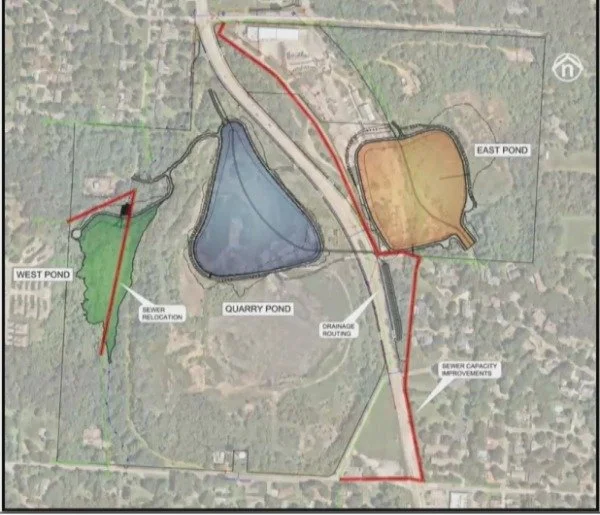
At the Fort Smith Board of Directors study session meeting held 4/17/26 with Director Settle absent, the Board discussed plans for the storm water mitigation ponds at the former Acme property. This issue was discussed and tabled at the 4/7/26 meeting. In April 2025, studies showed that the hard sandstone would require 3 ponds to be built instead of two. In June 2025, the Board directed Halff Associates to design for ponds that are dry most of the time and only wet when filled with storm water. In August 2025, 60% of the plans were delivered.
The Board heard details on the amendment to the contract with Halff Associates for an additional $464,860. 37% of the extra cost, $173,275, is for engineering for 3,300 ft of sewer line replacement and upsizing required by the consent decree. Design for the third West Pond, costing $69,840, would be to reduce the need for expensive rock excavation in the other ponds, avoid utility relocation, and avoid needing environmental permitting. The Geo-tech portion of the amendment, costing $45,520 would be to explore if the soil materials removed to build the East Pond could be used as embankment materials for the other ponds and to explore the potential for processing and selling shale resulting from the pond building on the west side of the property. The plans for a wet pond version of the Quarry pond (a lake type one that would be wet year round, not just when full of storm water), making up 22% of the amendment cost at $104,000, are a response to the public input that showed strong interest in a wet pond amenity. The plans at this stage would provide the cost difference numbers between a dry pond and a wet pond. The plans would not include designs for any parks amenities related to the pond, only for a wet pond focused on stormwater management. Engineering Director Mittge mentioned that a wet pond would have reduced maintenance costs as it does not need to be mowed like a dry pond would. He also mentioned that a wet pond would have potential for qualifying for grant money from grants related to amenities where a dry pond likely would not.
Director Martin asked if the sewer portion of the amendment would be paid out of the tax for consent decree sewer work. Mittge confirmed that it would. Mittge also mentioned that there are plans to apply for a federal FEMA BRIC program grant to reimburse up to 75% of the Acme storm pond project cost.
Director Kemp asked if they were confident that the amendment “encompasses finality” and when completed would be ready to move forward with bids for the project. Allen Deaver with Halff expressed his confidence that it would be. Director Kemp asked what would happen if the Board does not approve the amendment. Mittge said that the design would move forward with all 3 ponds being dry and there would be issues with permits on the west side. He said “We could make do.” He said that the consent decree sewer project would need to be added separately at some point.
The amendment will be up for a vote at the next meeting.

The Board heard a presentation from local resident Andy Posterick regarding a frontage levy approach to billing for water/sewer infrastructure. Posterick called the idea “hypothetical, philosophical” and clarified that he was “not there to sell the idea” but that it was something that the City should look into. The frontage levy would charge for utilities based on linear feet of property abutting public infrastructure instead of solely by usage volume. The system is intended to align revenue with fixed costs of maintaining and replacing pipes. The frontage levy system has not been tested in Arkansas.
Posterick mentioned that water use is down while the costs of pipes and employees to maintain them is up. He mentioned that it currently costs the City more to deliver water to residential households than residential households are charged for water. He mentioned that under the paying for usage volume model that vacant lots aren’t paying anything for the pipes that run along their frontage that they would have access to and that having access to City pipes adds value to the property and costs for maintenance and eventual replacement. The frontage levy would make them share in the infrastructure cost. The frontage levy would result in customers no longer being penalized for using more water. Larger parcels of property would likely see an increase in their bills under the frontage levy system while most households would see a decrease. Households that use water conservatively would likely see an increase. Big box stores would likely see an increase. The frontage levy system would result in bills for everyone that never fluctuate. Water meter accuracy would become mostly irrelevant in regards to billing and the need to read meters frequently would be eliminated. Top drawbacks to a frontage levy would be that it is difficult to collect (especially so on the vacant lots), there is no incentive to conserve water, and it is difficult to set up initially.
Posterick mentioned that Winnipeg, Canada uses a true frontage levy system. Fort Collins, Colorado does not use a true frontage levy, but has a similar system based on property space. Apartment complexes that use one meter often charge individual renters based on square footage.
Director Good asked if households that only use 1 or 2 CCF would likely see an increase under the frontage levy. Posterick answered that the bills for those users with the smallest use would go up.
Director Kemp mentioned that the vacant lots had to be crossed to get to the next resident. Posterick mentioned that the “next resident is paying for that empty lot’s pipes” under the current system. Director Kemp asked if switching to the frontage levy might bring enough extra revenue to pay for the Lake Fort Smith Transmission line project. Posterick answered that it would not make nearly enough of a difference to pay for the big projects like the transmission line or treatment plant upgrade. Director Kemp expressed his concerns about the levy being hard to collect on the vacant lots and there not being an incentive for under consumption, but called the frontage levy idea “an interesting hypothetical.”

The Board discussed freezing water and sewer rates for people over 65 years old. Recently Springdale has decided to freeze theirs for residents over 65 and Rogers has decided to freeze theirs for residents over 62.
For examples, the freeze would save a user who uses 1 CCF per month 49 cents a month in 2027, 99 cents a month in 2028, and $1.51 per month in 2029. A user who uses 3 CCFs would save $1.13 per month in 2027, $2.29 per month in 2028, and $3.49 per month in 2029.
Director George Catsavis said “I want to take a serious look at doing this here.”
Director Good expressed concerns about rate changes causing trouble with the EPA regarding verbiage in the recent consent decree modification regarding rates. It was pointed out that the consent decree language only applies to sewer rates, that water rates could be adjusted or frozen without worry about the consent decree. Director Good called the freeze “a fantastic idea.” He mentioned that seniors often use the least amount of water.
Director Christina Catsavis voiced her support for “relief” on water rates. She said that younger people subsidizing costs for the elderly is “part of living in a society.” Of challenges in setting up the billing system for the freeze, she said the City “would have to be creative with it” but mentioned the County has found a way to freeze the property taxes for people 65+.
Director Kemp suggested instituting a senior rate instead of a rate freeze.
Citizen Services Director Robertson mentioned that of the 820 total participants in the City’s Project Concern utility discount program for low-income residents that 330 participants are senior citizens.
Director Rego expressed his desire to be cautious about a change of the magnitude of a freeze. He suggested instead that efforts be made to increase participation in the Project Concern program.
Director Christina Catsavis mentioned that a freeze of only the first CCF used would more closely mirror Springdale’s freeze and would not result in a big loss of revenue.
Director Martin asked if irrigation meters would be included in the freeze. Deputy City Administrator Rice clarified that they would not, that it would only be for primary residential meters.
The issue will be added to the agenda for the first study session meeting in June.
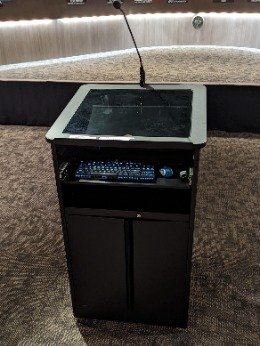
The Board discussed potentially changing the rule that during the monthly Citizens Forum residents may only speak on matters that are not on the agenda for the meeting to allow them to also speak on items that are on the agenda and changing the scheduling of the Citizens Forum and time allowed.
Director Christina Catsavis said of the current forum “I find the process frustrating” and mentioned that residents frequently wait 3 hours to have a chance to speak. She suggested that the forum be moved to the beginning of the study session meeting and that residents be allowed to speak on any topic they would like, even ones that are on the meeting agenda.
Director Good said that he was “all for putting it back at the beginning” and voiced his preference for putting it at the beginning of a regular meeting not at the beginning of a study session. He mentioned that back when the Board of Directors meetings were held at the Services Center that the Citizens Forum section of the meeting was often used as “a time to be seen” with people doing things like singing songs and misusing the time but that participants are “now more interested in getting their concerns to the Board.” Director Christina Catsavis agreed.
Director Kemp voiced his preference for moving the forum to the beginning of every regular meeting rather than just once a month. He suggested a 3 minute time limit for Forum speakers. City Clerk Gard mentioned that that was how it used to be at one point, at the beginning of every meeting with each speaker being allowed 2 minutes.
Director George Catsavis acknowledged that the forum was “abused” in the past but said that “They have the right to talk.”
Director Christina Catsavis voiced her preference for each forum speaker still being allowed 5 minutes.
Moving the Citizens Forum to the beginning of every regular meeting with each speaker being allowed 3 minutes on any topic (including agenda items) will be up for a vote on the 4-21-26 meeting agenda.
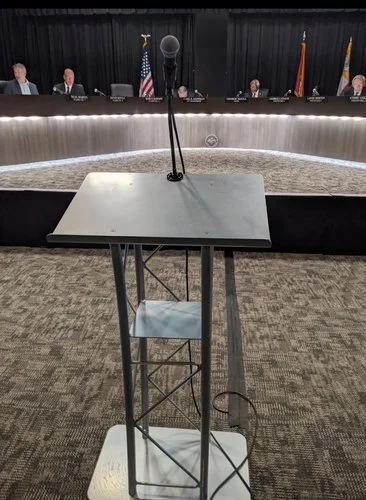
During the Citizens Forum section of the meeting, Jimmy Harrison spoke and asked for an update on the City Administrator hiring process. Director Kemp responded that the nationwide search by Colin Baenziger is in progress and that the hope is to have the process completed and someone hired for the position by the end of July.
Quinton Cunningham spoke and said that the Main Street Fort Smith survey “data is misleading” because homelessness and housing insecurity were included in the same check box. He mentioned that while 658 respondents to the survey mentioned homelessness with 400 expressing concern over homelessness only 67 respondents mentioned support for enforcement/removal of homeless people. He said that people “want real actionable solutions.” He mentioned there being zero evidence of constant systematic bussing of homeless people into Fort Smith as has been rumored by some to be an issue. He mentioned receiving the responses from the Main Street Fort Survey with privacy violations from poorly redacted personal information. He suggested terminating the services contract with Main Street Fort Smith.
Gary Podgurski spoke and gave a freedom of speech “civics lesson” regarding the 1st Amendment to the US Constitution and including social media practices.
John Remer spoke regarding the need for better access to low-cost veterinary care. He suggested that the City consider leasing his clinic (as he is planning to retire) and operating it as a low cost veterinary hospital for low to medium income residents. He mentioned that Rogers is establishing one.
Shane McKinney spoke and mentioned that in the alleyway rehabilitation project alley near his property that concrete was just poured around utility poles instead of moving the poles. He suggested that the Directors need to personally visit more of the construction projects while they are under construction to make sure that the jobs are being done correctly. Director Martin said that the City staff looks at the projects that are being built. Director Good said that there is “no way in the world” the Directors can go and personally look at all the construction projects.
Amanda Lankart spoke against mosquito fogging. She mentioned that spray will drift onto nearby properties that did not opt in to be sprayed. She expressed concerns about the health risks of the chemicals used to humans, waterways, and bees. She voiced support for larvicide and “ecosystem first” programs instead.
Liz Smith spoke and thanked the Board for their efforts.
Krystal Cadelli spoke about prioritization for budgeting. She mentioned the deep recent budget cuts across all departments but that then the Board has started spending again. She said that over $2.6 million “for non-essentials” has already been added back. She also suggested selling some City owned properties.
Chris Cadelli spoke and expressed concerns about Baptist hospital closing Labor and Delivery and planning to reduce hospital services. He suggested that the City should get involved and “find a way to recruit someone to fill that gap.” He also voiced his support for changing the City’s form of government to a strong mayor system.
Joey McCutchen spoke and voiced his support for the change in the City’s form of government to a strong mayor system. He also mentioned that he has heard about a “secret water line project” for Parrot Island that is to be performed soon but that was not put out for bids. He said that the project involves putting a 12 inch water line under Zero to supply enough capacity for the new slides and will cost $30,000-$40,000. He said that the project “needs to be investigated.”
Dan Williams spoke about accountability. He also suggested making focus on downtown homelessness a priority. Director Martin said that downtown is the most policed part of the city and that “plenty of resources” are being put in on the issue.
Dawn Chesser and Eduardo Guzman both spoke and expressed their concerns about the Baptist hospital reducing services.
Richard Morris spoke and praised the new hearing assistance devices available at the Board of Directors meetings. He also called for greater adherence to Roberts Rules of Order procedures, controlling the floor, and decorum and respect at Board meetings.