Highlights of the Fort Smith Board of Directors Meeting 3/31/26

At the Fort Smith Board of Directors meeting held 3-31-26, the Board voted unanimously to request Congressionally Directed Spending funds from Senator Boozman to complete section 2A1-2 of the Lake Fort Smith water transmission line project. If awarded, the request of up to $12 million may require a 25% local contribution from the City. Fort Smith received Congressionally Directed Spending funds from Boozman in 2024 for section 2A1-1 of the water transmission line project.
Director Martin asked what the total cost of phase 2 of the project would be. Engineering Director Mittge answered $25 million. Director Martin mentioned that we already have funding for $12 million of the project. Grants Manager Hoover mentioned that recently he also was able to work with the EPA and find and receive a waiver that will exempt the City from having to pay the $3 million local contribution originally expected to be required for the $12 million.
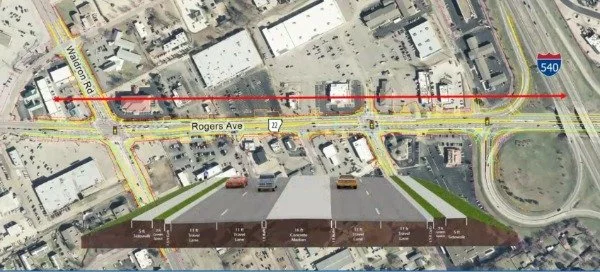
The Board voted unanimously to request Congressionally Directed Spending funds from Senator Boozman for the required relocation of water and sewer utilities related to ARDOT’s project widening Rogers Avenue. The widening project was discussed at the 9-10-24 meeting. If awarded, the request of up to $20 million may require up to a 25% local contribution from the City.
Gary Podgurski spoke and asked about the scope of the project. Acting City Administrator Dingman clarified that the request was just for the funds to move the utilities.
Director Martin asked if the Rogers widening project would include the burying of electrical lines. Mittge answered that it would and that $400,000 would be used from City road funds for burying the lines.
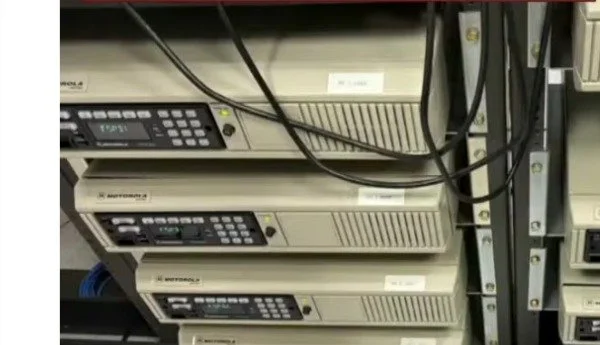
Director Kemp added an item to the agenda for the meeting. He motioned that the Board request Congressionally Directed Spending funds from Senator Boozman for radio equipment for the 911 call center including for the radio tower.
Director of Public Safety Communications Milam voiced his support for the request. He said of funding options “I’m looking at anything.” He mentioned that Congressman Womack will be touring the 911 center on Tuesday.
Hoover mentioned that deadline to apply for Womack’s Congressionally Directed Spending funds was earlier in March, but that the deadline for Boozman’s is April 5.
Director Christina Catsavis reminded that no location has been set for a permanent location for the facility. She voiced her view that until a site is chosen that Fort Smith would “look like a bunch of amateurs” asking for a radio tower. Milam agreed that the tower need not be included in the request until the location is set and that the request could be for just the radio equipment to replace what is currently being used. Milam said that radio equipment would be moved to whatever permanent location is eventually established.
Director Christina Catsavis voiced her concerns that with the crucial need for the water infrastructure projects requesting the radios would “look like we can’t prioritize.” She suggested instead considering requesting the radios next year. She suggested submitting a request with Womack in his next cycle.
Dingman reminded that Fort Smith asked for Congressionally Directed Spending funds from Senator Boozman for radio equipment for the 911 call center in the past and was not awarded them. He mentioned that radio equipment was not on the list of projects discussed for Congressionally Directed Spending funding this year and that the choices of projects to request funds for were to reflect a prioritization of water projects. He expressed his view that the 911 center equipment is in a “state of limbo” while looking for a permanent location. Director Christina Catsavis asked why the Congressionally Directed Spending funding for the radios was not awarded last time. Hoover said that part of it was that the request was “a little bit too large” but mostly it was because Congress had a Continuing Resolution that resulted in all of the earmarks being pulled for 2025, so in 2026 it was heavily competitive with 2 years’ worth of requests for one year’s worth of funding.
Hoover recommended waiting to request the radios until next year and using the meantime to educate the Congressional delegation about the radios and the 911 call center. However, he said that it “doesn’t hurt to submit 3 requests” and that a public safety request is a “strong candidate.”
Director Settle asked about submitting a request for funding from Senator Cotton. Hoover answered that Cotton does not take earmark requests.
Director Kemp said of requesting funding from Boozman again “bringing it back shows urgency.”
Director Good voiced his support for requesting the funds as the radios are important to public safety.
Hoover asked the Board which of the 3 requests should be the priority if Boozman asks about what the priority is. The Board answered that the water projects should be the priority.
Gary Podgurski spoke and suggested that the funding request should be a joint request from both the County and the City.
Director Christina Catsavis said that with the local contribution required if the $3 million were to be awarded being $750,000 that the issue should have to go to study session first before coming to a vote to comply with the ordinance requiring capital spending over $100,000 to go to a study session first. Dingman said that request being voted on was just the application so the issue would come back to the Board again before any money was to be committed.
The Board voted to request $3 million in Congressionally Directed funds from Boozman for the 911 center radios (not the tower) with only Director Christina Catsavis voting against the request.
Inspired by the recent announcement that Baptist Health will be reducing their hospital services in Fort Smith, including a sudden closing of Labor and Delivery, Director Christina Catsavis added an item to the agenda. She motioned that the Board send a letter to the Arkansas General Assembly requesting them to make a law requiring all hospitals to give the public 180 days notice before discontinuing major services. She said that the longest public notification period required for that in other states is 120 days. She said that initially she wanted to write a City Ordinance making the requirement, but learned that the City did not have legal authority to make that requirement by ordinance and that it would have to be done at the State level.
Director Rego asked about why the 180 day notice period length was chosen. Director Christina Catsavis said that it was from discussions she had with care providers and that it was to give employees notice to find new jobs and for patients to shift their care to another provider. Director Rego asked about the services that would be considered as the essential or major services. Director Christina Catsavis said that the State could decide that when crafting the law. Director Rego asked if the action requested in the letter could be taken by the State legislature during the fiscal session or if it would need to be during a regular session. Mayor McGill said that it would typically be for the regular session. He said that it is not likely that the Governor would call a special session for that issue. Director Christina Catsavis, talking about the statewide nature of the issue, mentioned that Monticello has had a similar issue with an unexpected hospital closure.
Director Martin asked if the notification requirement would also apply to when multiple physicians in a certain area of practice are terminated or their contracts are not renewed. Director Christina Catsavis said that she did not know for sure, but that she had in mind more of when a hospital discontinues a type of service all together.
Director Rego asked Director Catsavis if she had talked to the local delegation from the General Assembly. She said that Arkansas has the lowest reimbursement for Medicare and Medicaid in the nation. She said that recently there was a bill in the Arkansas House to improve that by basing reimbursement rates on the average rates for nearby states but that it did not pass.
Mayor McGill said that he did not support sending the letter at this point and that he was “interested in in-depth information from Baptist” first.
Director Kemp voiced sympathy for people impacted by the closing of the labor and delivery. However, he voiced his view that the letter won’t help. He said that “People are choosing Mercy” and “People like specialized hospitals.” He mentioned that he talked to investors about building a special labor and delivery hospital facility. He said that hospitals are “not a public utility.” He called the hospital closing issue “a tension to be managed, not a problem to solve.”
Director Christina Catsavis said “Healthcare is as critical as a public utility.” She also talked about the importance of healthcare availability in attracting businesses and growth.
Director suggested tabling the issue until first talking to the local delegation of State legislators and the Arkansas Municipal League.
Director Martin said that the letter is “just a letter” and by voting to send it the Board are “not setting policy here.”
Director Christina Catsavis voiced her view that it would be “overkill” to bring in State legislators to ask if them if the Board ought to send them a letter.
Gary Podgurski spoke and said “That letter does nothing.” He said that the Board cannot tell a non-profit what they can and cannot do. He expressed his view that with any legislation inspired by the letter not being able to be voted on until 2027 that there is not any reason to vote on the letter at the meeting. He voiced frustration at the item being added at the meeting instead of being included in an agenda distributed in advance so that the public would have more time to be aware of the item to give feedback. Director Christina Catsavis said “You haven’t read the letter. You don’t know what’s in it.” She also mentioned that the State does regulate hospitals.
Krystal Cadelli spoke in support of the letter and called it “being proactive.”
Shane McKinney spoke and wondered aloud why Baptist Health didn’t feel comfortable talking to the City about the closure. He called the situation a “communication breakdown.” He said that the 180 day period would make it more difficult to attract healthcare investment and suggested that instead the period be kept in line with nearby states. Director Christina Catsavis said that she would be fine with amending the letter to include a 120 day period instead.
Director Rego motioned to table the issue until the second study session meeting in April to allow time to talk to legislators and to Baptist Health.
The Board voted to table the issue until the second study session in April with all but Director Christina Catsavis and Director George Catsavis voting in favor of tabling.

The Board heard an update on the consolidated 911 call center. The full consolidation of the County and City 911 systems is set to be complete 7-6-26 with the operations housed temporarily at the Fort Smith Police Department. Director of Public Safety Communications Milam discussed the need for new radio equipment to replace the existing old equipment that will no longer be operational in 2031. The radios typically have an expected lifespan of 7-10 years and have been in service for 19 years. He also discussed the need for a bigger stand-alone permanent facility especially to accommodate incorporation of emergency medical dispatching into the facility. He mentioned that some considerations for the facility is that it have space for 12 work stations and that it be located in the line of sight of a microwave radio tower. The better the elevation is, the lower the cost will be to construct the radio tower. He said that it could be possible to put the tower on the roof of a building.

The Board discussed the former Crain Kia property at 8200 Hwy 71 South that was purchased to be used for a Police Department training facility and second precinct in 2024. The funding for the renovations has been cut from the budget each budget year since the purchase. Police Chief Baker discussed the need for a precinct at that location with the increase in demand for police services along 71 South and the lack of other police facilities in that area of town. He mentioned that it takes 20 minutes to drive to the southern edge of town from Police Headquarters. He said that the Police Department spends $35,000 per year on the County training facility for training and it is not suitable for large classes or some of the premium courses so officers still have to travel outside of Fort Smith for training.
Travis Bartlett with MAHG Architecture presented 3 different architectural options. Option 1 would be the most deluxe version and would start with the training center and that first phase would cost $5,406,581.25 and then would have a second phase for the police precinct that would cost $7,630,035. Option 2 would start with a training center for $5,406,581.25 and then a second phase for the police precinct that would have a reduced square footage versus Option 1 for $4,649,407.50. A third single option that would stay mostly within the existing 2 buildings and would have a reduced square footage for the police precinct versus Option 1 would cost $7,727,452.50
Director Kemp asked how long it would take to complete Option 3. Bartlett said that it would be about 20 months to have it ready to open.
Baker mentioned that $21,500 has already been spent with MAHG for the designs. The property was purchased for $2.85 million and Baker said that a realtor said that he was confident there would be an interested buyer to buy it for $2.85 million if it were to be sold. Baker mentioned, though, that the property was discounted $650,000 for giving Crain naming rights so there would likely be a lawsuit for the $650,000 if the property were sold.
Baker mentioned that the Choctaw Nation is highly likely to be developing the land that is currently a parking lot that is Choctaw land inside of the Fort Smith city limits. He has spoken with the Choctaw Chief who has expressed interest in collaboration and cross-training between the tribal Light Horse Police and the FSPD and interest in the training facility at the property. The Chief also expressed interest in possibly helping fund (even up to a “7-figure range” investment) saying it is “just the kind of project we could invest in in Fort Smith.” He voiced the importance of local financial support, too. Baker said that Senator Boozman also expressed interest in the facility and possibly helping fund the technology and equipment for it. Boozman said that local financial support “would be crucial.”
Baker proposed 3 potential courses of action for the City to take on the property. Option 1 was to sell the property and allocate $1 million from the sale back to the Police Department. Option 2 was to fully and immediately commit to funding either architectural option 2 or architectural option 3. Option 3 was to allow the Police Department to create a sinking fund and for the Board to over the next 3 years commit to putting a set amount of money from the general fund into that sinking fund (without sacrificing police positions or salaries), and for the Police Department to also seek private donations and grants to build architectural option 3 in phases starting with the training facility.
Director Rego and Director Kemp both voiced their support for Option 3.
Director Settle said that he is not in favor of selling the property. He asked if there would be a cost savings by having a second precinct. Baker answered “There could be cost savings.” Director Settle suggested borrowing on a 20 year loan to start construction on architectural option 2 right away.
Director Good said he was “enthusiastic” about cost sharing with the Choctaw Nation. He said he was not in favor of selling the property. He voiced his support for option 2 or option 3.
Director George Catsavis asked about selling other naming rights at the facility. Baker said that they could sell naming rights to specific rooms and to fixtures and also could do a brick sales campaign. Director George Catsavis said “I think we can get it done.”
Baker clarified the Board’s sentiment that they don’t want to sell the property and are willing to support construction of the facility to some degree. He said “Having those two questions answered will help tremendously.”
Mayor McGill voiced his support for the second precinct.